


 Free Newsletter

SCOTUS reverses new trial order in attempted murder case
Pat Murphy//February 2, 2026//


 Listen to this article
AT A GLANCE
· Supreme Court reversed the 4th Circuit’s order granting a new trial under federal habeas law
· Justices said lower federal courts misapplied AEDPA‘s “highly deferential” standard
· Case centered on undisclosed forensic evidence and alleged Brady violations
· State court’s denial of postconviction relief was upheld as reasonable
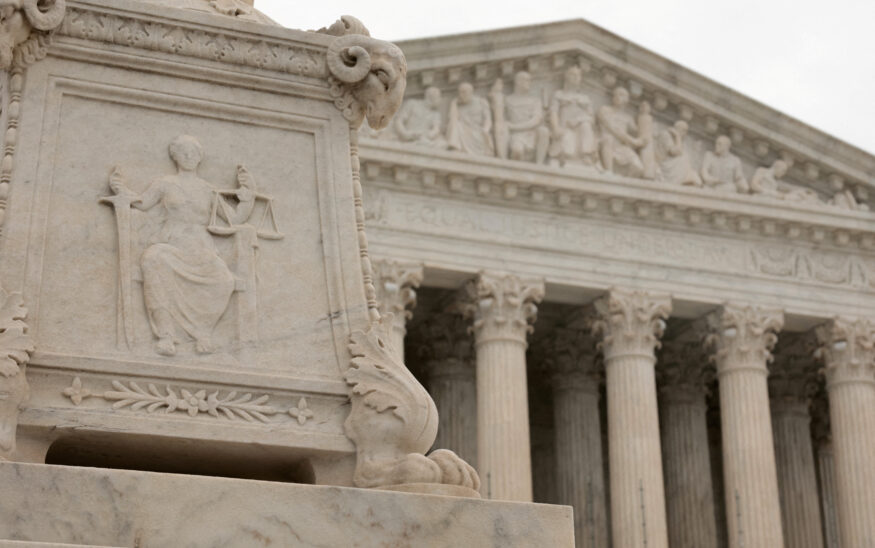
The U.S. Supreme Court has ruled that federal courts departed from the “strict standards” governing the grant of habeas relief to prisoners convicted in state court by ordering a new trial in the case of a Maryland man convicted of the attempted murder of one of his girlfriends.
The case involved Charles Brandon Martin’s 2010 conviction in Maryland state court for the attempted murder of Jodi Torok. According to prosecutors, the defendant plotted to murder Torok because she refused to have an abortion. Several weeks after Torok told Martin that she was pregnant with a baby she thought was his, she was found unconscious on the floor of her apartment, bleeding with a bullet wound to the head.
Torok survived the attack, but suffered serious, permanent injuries.
Police recovered at the scene a Gatorade bottle that evidence suggested had been converted into a homemade silencer for the handgun used by the perpetrator.
At trial, in addition to other evidence pointing to Martin as the shooter, another of the defendant’s girlfriends, Sheri Carter, testified that she recalled seeing Martin shortly before the shooting “looking up gun silencers” on a laptop he had kept at her apartment.
The trial judge sentenced Martin to jury to life imprisonment after a jury found Martin guilty of attempted murder. State courts affirmed his conviction on direct appeal.
The defendant later sought postconviction relief in state court based on the state’s failure to disclose a forensic report of five laptops seized from Martin. The forensic report of a laptop suspected to be the computer referenced in Carter’s testimony indicated that the device had not been used for years prior to the shooting.
Moreover, the report showed that investigators had been unable to find any evidence that the laptop had been used in searches related to the making of homemade silencers.
Despite the state’s failure to turn over evidence that undermined Carter’s testimony, a state appellate court concluded a new trial was not warranted under Brady v. Maryland. The state court found there was no “reasonable probability that the result of [the] trial would have been different had the evidence been disclosed” because other evidence linking Martin to the crime was so “strong.”
Martin thereafter sought habeas relief in federal court under the Antiterrorism and Effective Death Penalty Act of 1996. A federal judge granted the defendant habeas relief in 2024, and a divided panel of the 4th U.S. Circuit Court of Appeals affirmed the lower court order for a new trial.
The Supreme Court granted the state’s petition for certiorari and reversed the 4th Circuit in a per curiam decision. The court concluded the AEDPA required the denial of Martin’s federal habeas petition because the state appeals court’s denial of postconviction relief was neither “contrary to” nor “involved an unreasonable application” of “clearly established Federal law.”
BULLET POINTS: “The [4th Circuit] panel majority … held that the state appellate court applied the wrong rule because that court failed to discuss certain evidence that tended to undermine the State’s case and because its analysis was not sufficiently ‘nuanced.’ That holding was a basic misapplication of AEDPA, which bars federal courts from imposing opinion-writing standards on state courts and demands that the relevant state-court decision be given the ‘benefit of the doubt.’ The majority’s ‘readiness to attribute error’ to the state appellate court despite that court’s correct citation and synthesis of our precedent was both ‘inconsistent with the presumption that state courts know and follow the law’ and ‘incompatible with [28 U.S.C.] §2254(d)’s “highly” deferential standard for evaluating state-court rulings.’…
“The panel majority also went astray in holding that every fairminded jurist would find that the undisclosed forensic report about Martin’s laptop was material. On the contrary, the record contains ‘strong support’ for the state court’s conclusion that Martin ‘would have been convicted’ even if the forensic report ‘severely impeached’ Carter.” — opinion of the court (Justice Ketanji Brown Jackson would have denied the petition for a writ of certiorari)
Related Articles
Related Content





Business Law
- Economy forces attorneys to get down to business
- Business Court judges trawl for customers
- Va. company's Web site did not subject business to personal jurisdiction in S.C., appeals panel rules
- Former running back from S.C. wins courtroom victory in contract dispute
- Contract – Government Contract – Qui Tam – False Claims Act
- Licenses & Permits – Beer & Wine Permit – Restrictive Covenant – Suitable Location
- Consumer Protection – FCRA – Auto Loan – Bank Accounting Errors
- Licenses & Permits – Veterinarian – Vaccine Maintenance
- Tort – Business Tort – Va. Computer Crimes Act – Trade Secrets
- Textile firm, railroad settle Graniteville train wreck lawsuit
- State regulators look at car dealer accused of lying to customers
- Subprime mortgage meltdown hits securities law


Commentary
- ‘AI won’t take your job’ and other things CEOs say before the layoffs
- When not to believe (your lyin’ eyes)
- Conduct a technology audit to improve law firm efficiency
- When the client brings ChatGPT to the consultation
- Where is she now, this model who was so beautiful?
- Content Marketing: Where law firms lose referrals and how to prevent it
- Your best people are not leaving for more money — they are leaving because you stopped paying attention
- Best at Work Insights: The choice we’re making about AI
- Beyond burnout: The case for workplaces where people thrive
- The December question every leader should anticipate
- Best at Work Insights: Don’t Import 996: Why America Should Reject Overwork Culture
- Law ‘n History: The beer, scandal and haunted mansion of the Lemp dynasty
Polls
 Loading ...


SC Lawyers Weekly keeps you connected with the latest legal news, Daily Practice and Breaking
News alerts.
Sign-up for SC Lawyers Weekly Email Alerts
