


 Free Newsletter

Where is she now, this model who was so beautiful?
R. Marc Kantrowitz//April 27, 2026//
Where is she now, this model who was so beautiful?
R. Marc Kantrowitz//April 27, 2026//


She is all around, yet no one sees her. She has a name, but no one knows it. When revealed, it is quickly forgotten.
Audrey Marie Munson was born in Rochester, New York, on June 8, 1891, to a father who descended from the Puritans and drove a streetcar and a mother who left her husband when Audrey was just 8.
Seventeen years later, Audrey moved to New York City seeking fame and fortune as a chorus girl and actress. She must have been either talented or lucky as she quickly found herself on Broadway, albeit in minor roles.
While window shopping one day, a professional photographer happened upon her. She was soon posing for him, and before she was long posing for many others, including some of the top artists in the world.
She gained her greatest exposure working with sculptors, dozens of them. That occasionally she was asked to pose in the nude proved little impediment to her career. Indeed, it enhanced it.
In 1915, she appeared in the first of her four silent films. As The Morning Telegraph noted, “Inspiration presents a decided novelty, for it is the first moving picture in which the nude figure of a woman has been used for artistic reasons only.” It went on to describe Munson as “a classic beauty … [who is] one of the nation’s foremost models.”
The National Board of Censorship, which permitted the showing of the film, came under harsh criticism, resulting in its ruling that any film with nudity in the future would “receive the most critical consideration [and would pass only if the nudity was] an essential element of a drama the nature of which warrants such presentation.”
After enjoying the high lifestyle of New York and Newport, Audrey and her mother settled in a boarding house owned by the well-off Dr. Walter Wilkins in New York’s Upper West Side.
Although the tall and distinguished doctor, at 67, was substantially older than the comely Audrey, and married to boot, he quickly developed a crush on her. Even after she moved out, Wilkins remained fixated, to the point that, on the cold and blustery evening of Feb. 27, 1919, he bludgeoned his dowdy wife to death in their Long Beach house on Long Island.
Free of matrimony, he perhaps imagined a life with a woman young enough to be his daughter.
When he was eventually captured, he maintained his innocence. Four months after the homicide, Wilkins was tried, found guilty, and sentenced to death. He committed suicide while awaiting execution.
Audrey, who had nothing to do with the man who was obsessed with her, cooperated with the authorities. Despite her innocence, the press quickly pounced, dubbing her “Miss Manhattan,” the “American Venus,” a “seductress,” and a “femme fatale” as they fabricated a love triangle. The fact that she posed nude and was well-known added to the salaciousness of the story.
Her beauty, her past, and one man’s obsession highlighted story after story in New York and around the country. She soon found herself ostracized and shunned. Movie roles disappeared, as did modeling work. She mentally deteriorated as she found herself adrift.
In 1931, at the age of 40, Audrey was committed to a mental institution by her mother. She remained institutionalized for 65 years, dying at the age of 104 in total anonymity.
Long dead, she remains forever alive:
• at the Columbus Circle entrance to Central Park where she stands as “Columbia Triumphant” on the USS Maine National Monument, commemorating the 260 American sailors who died when their battleship Maine exploded in Cuba in 1898, triggering the Spanish-American War;
• in the Strauss Memorial in Riverside Park, where she, as “Memory,” grieves Titanic victims Isidor and Ida Strauss;
• as a 25-foot figure, “Civic Fame,” gracing the Manhattan Municipal Building;
• as the symbol of “Justice” atop New York’s City Hall;
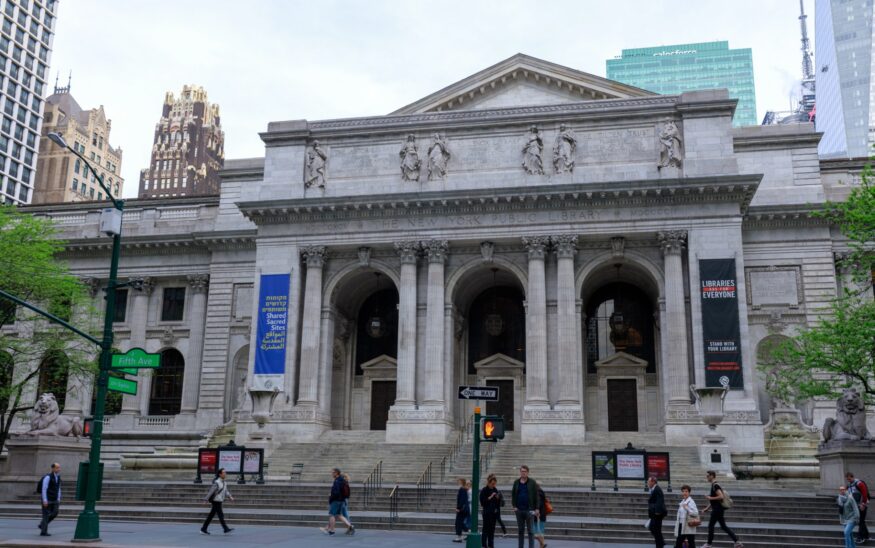
• as “Peace” (also referred to as “Beauty”) in front of New York’s Public Library;
• on the façade of the Alexander Hamilton U.S. Customs House in Bowling Green, representing, with others, world continents and commerce;
• as the reclining female above the entrance to the Frick Museum;
• as “Manhattan” for those entering and driving over the Manhattan Bridge;
• as “Brooklyn” in the Brooklyn Museum; and
• as “Duty” and “Courage” on the Firemen’s Memorial on Riverside Drive.
Audrey’s likeness also graces statues in San Francisco (as the “Panama-Pacific Girl”), Cambridge (as the “Evangeline” figure in the Longfellow Memorial), and other cities.
Some opine, without verification, that she also sits as the Winged Liberty Head on the Mercury dime and on the Walking Liberty half dollar.
May Audrey Munson be remembered for the life she lived.
The above column is based on numerous internet sources. When he isn’t writing, retired Massachusetts Appeals Court Judge R. Marc Kantrowitz is of counsel to Soraya Law and a mediator for the Real Estate Bar Association’s DR program. He can be contacted at [email protected].
Related Articles
Related Content





Business Law
- Economy forces attorneys to get down to business
- Business Court judges trawl for customers
- Va. company's Web site did not subject business to personal jurisdiction in S.C., appeals panel rules
- Former running back from S.C. wins courtroom victory in contract dispute
- Contract – Government Contract – Qui Tam – False Claims Act
- Licenses & Permits – Beer & Wine Permit – Restrictive Covenant – Suitable Location
- Consumer Protection – FCRA – Auto Loan – Bank Accounting Errors
- Licenses & Permits – Veterinarian – Vaccine Maintenance
- Tort – Business Tort – Va. Computer Crimes Act – Trade Secrets
- Textile firm, railroad settle Graniteville train wreck lawsuit
- State regulators look at car dealer accused of lying to customers
- Subprime mortgage meltdown hits securities law



Commentary
- When is a PIP an adverse employment action?
- Legally Speaking: What spring can teach us about active listening
- A useful patent management government notice
- The third option: Why your best employees are quietly losing their edge
- ‘AI won’t take your job’ and other things CEOs say before the layoffs
- When not to believe (your lyin’ eyes)
- Conduct a technology audit to improve law firm efficiency
- When the client brings ChatGPT to the consultation
- Where is she now, this model who was so beautiful?
- Content Marketing: Where law firms lose referrals and how to prevent it
- Your best people are not leaving for more money — they are leaving because you stopped paying attention
- Best at Work Insights: The choice we’re making about AI
Polls
 Loading ...


SC Lawyers Weekly keeps you connected with the latest legal news, Daily Practice and Breaking
News alerts.
Sign-up for SC Lawyers Weekly Email Alerts
