


 Free Newsletter


Ruling boosts challenges to federal regulations
The Associated Press//July 2, 2024//


 Listen to this article
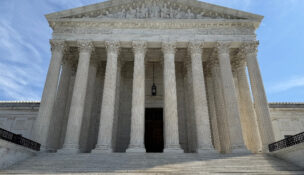
WASHINGTON — The Supreme Court opened the door Monday to new, broad challenges to regulations long after they take effect, the third blow in a week to federal agencies.
The justices ruled 6-3 in favor of a truck stop in North Dakota that wants to sue over a regulation on debit card swipe fees that the federal appeals court in Washington upheld 10 years ago.
Federal law sets a six-year deadline for broad challenges to regulations. In this case, the regulation from the Federal Reserve governing the fees merchants must pay banks whenever customers use a debit card took effect in 2011.
The deadline for lawsuits over the regulation was in 2017.
Corner Post, a truck stop in Watford City, North Dakota, didn’t open until 2018.
Still, a federal appeals court dismissed the challenge as too late.
The company appealed to the U.S. Supreme Court. The Biden administration had urged the court to uphold the dismissal because otherwise, governmental agencies would be subject to endless challenges.
The decision could take on new significance in the wake of last week’s ruling that overturned the 1984 Chevron decision that made it easier to uphold regulations across a wide swath of American life. The court also stripped the Securities and Exchange Commission of a major tool to fight securities fraud.
Chief Justice John Roberts captured the dilemma facing the court when the Corner Post case was argued in February. Agencies could face repeated challenges “10 years later, 20 years later” and “sort of have to create the universe, you know, repeatedly.”
On the other hand, Roberts said, “You have an individual or an entity that is harmed by something the government is doing, and you’re saying, well, that’s just too bad, you can’t do anything about it because other people had six years to do something about it.”
The legal principle that everybody is entitled to their day in court, Roberts said, “doesn’t say unless somebody else had a day in court.”
Related Content





Business Law
- Economy forces attorneys to get down to business
- Business Court judges trawl for customers
- Va. company's Web site did not subject business to personal jurisdiction in S.C., appeals panel rules
- Former running back from S.C. wins courtroom victory in contract dispute
- Contract – Government Contract – Qui Tam – False Claims Act
- Licenses & Permits – Beer & Wine Permit – Restrictive Covenant – Suitable Location
- Consumer Protection – FCRA – Auto Loan – Bank Accounting Errors
- Licenses & Permits – Veterinarian – Vaccine Maintenance
- Tort – Business Tort – Va. Computer Crimes Act – Trade Secrets
- Textile firm, railroad settle Graniteville train wreck lawsuit
- State regulators look at car dealer accused of lying to customers
- Subprime mortgage meltdown hits securities law


Commentary
- The third option: Why your best employees are quietly losing their edge
- ‘AI won’t take your job’ and other things CEOs say before the layoffs
- When not to believe (your lyin’ eyes)
- Conduct a technology audit to improve law firm efficiency
- When the client brings ChatGPT to the consultation
- Where is she now, this model who was so beautiful?
- Content Marketing: Where law firms lose referrals and how to prevent it
- Your best people are not leaving for more money — they are leaving because you stopped paying attention
- Best at Work Insights: The choice we’re making about AI
- Beyond burnout: The case for workplaces where people thrive
- The December question every leader should anticipate
- Best at Work Insights: Don’t Import 996: Why America Should Reject Overwork Culture
Polls
 Loading ...


SC Lawyers Weekly keeps you connected with the latest legal news, Daily Practice and Breaking
News alerts.
Sign-up for SC Lawyers Weekly Email Alerts
