


 Free Newsletter

Supreme court restores summary judgment for agent in crawl-space moisture dispute
South Carolina Lawyers Weekly staff//May 2, 2025//
Supreme court restores summary judgment for agent in crawl-space moisture dispute
South Carolina Lawyers Weekly staff//May 2, 2025//


 Listen to this article
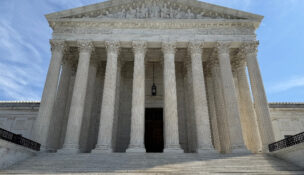
The South Carolina Supreme Court ruled that a couple buying a home could not proceed against a listing agent over hidden moisture issues, reversing the Court of Appeals and reinstating the circuit court’s summary judgment.
The plaintiffs alleged the defendant negligently misrepresented a June 2018 wood-infestation (“CL-100”) report as “good” and failed to disclose earlier inspections showing elevated crawl-space moisture. Yet deposition testimony from the couple’s own broker, doomed their case: he insisted he never relied on the defendant’s characterization, planned from the outset to commission a fresh CL-100 “on our terms,” and understood the buyers bore responsibility for verifying repairs. The defendant had, in fact, supplied the plaintiffs with a Cornerstone inspection report documenting the same moisture concerns and a seller repair list detailing corrective measures. Because reasonable reliance is an essential element of negligent misrepresentation, and the record showed none, the justices held the buyers failed to create a genuine factual dispute.
The court likewise rejected the plaintiffs’ claim under the South Carolina Residential Property Condition Disclosure Act. The statute imposes liability on sellers who knowingly omit material facts but shields real-estate licensees unless they have actual knowledge; it creates no independent private right of action against agents. While the Act preserves traditional tort remedies, the plaintiffs’ negligence-based theories already failed for lack of reliance.
Addressing the defendant’s procedural contention, the court clarified that Rule 56 does not allow cases to survive on a “mere scintilla” of evidence; plaintiffs must point to specific facts indicating each element can be proven at trial. Absent such proof, summary judgment promotes transactional certainty and spares professionals the burden of defending speculative claims.
Accordingly, all causes against the defendant were dismissed and the circuit court’s order was fully reinstated.
The 10-page opinion is Isaac v. Onions, I.C. Lawyers’ Weekly No. 010-024-25.
Related Articles
Related Content
Business Law
- Economy forces attorneys to get down to business
- Business Court judges trawl for customers
- Va. company's Web site did not subject business to personal jurisdiction in S.C., appeals panel rules
- Former running back from S.C. wins courtroom victory in contract dispute
- Contract – Government Contract – Qui Tam – False Claims Act
- Licenses & Permits – Beer & Wine Permit – Restrictive Covenant – Suitable Location
- Consumer Protection – FCRA – Auto Loan – Bank Accounting Errors
- Licenses & Permits – Veterinarian – Vaccine Maintenance
- Tort – Business Tort – Va. Computer Crimes Act – Trade Secrets
- Textile firm, railroad settle Graniteville train wreck lawsuit
- State regulators look at car dealer accused of lying to customers
- Subprime mortgage meltdown hits securities law


Commentary
- When is a PIP an adverse employment action?
- Legally Speaking: What spring can teach us about active listening
- A useful patent management government notice
- The third option: Why your best employees are quietly losing their edge
- ‘AI won’t take your job’ and other things CEOs say before the layoffs
- When not to believe (your lyin’ eyes)
- Conduct a technology audit to improve law firm efficiency
- When the client brings ChatGPT to the consultation
- Where is she now, this model who was so beautiful?
- Content Marketing: Where law firms lose referrals and how to prevent it
- Your best people are not leaving for more money — they are leaving because you stopped paying attention
- Best at Work Insights: The choice we’re making about AI
Polls
 Loading ...


SC Lawyers Weekly keeps you connected with the latest legal news, Daily Practice and Breaking
News alerts.
Sign-up for SC Lawyers Weekly Email Alerts
