


 Free Newsletter

Supreme Court sides with Steve Bannon in bid to dismiss Jan. 6 conviction
washingtonpost//April 6, 2026//

Supreme Court sides with Steve Bannon in bid to dismiss Jan. 6 conviction
washingtonpost//April 6, 2026//


 Listen to this article
Summary:
- Supreme Court vacates DC circuit ruling on Bannon conviction
- Justice Department supports dismissal of Bannon contempt charges
- Bannon convicted for defying congressional Jan. 6 subpoena
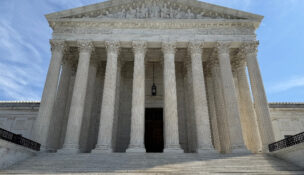
The Supreme Court on Monday cleared a path for Stephen K. Bannon’s effort, backed by the Justice Department, to dismiss his conviction for defying a congressional subpoena related to the Jan. 6, 2021, assault on the U.S. Capitol.
In a brief, unsigned order Monday morning, the court vacated a judgment by the U.S. Court of Appeals for the D.C. Circuit upholding Bannon’s conviction. The high court sent the case back to the appeals court for reconsideration in light of a motion to dismiss that the Justice Department filed two months ago.
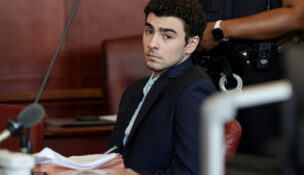
Bannon, an influential right-wing podcaster and former chief strategist to President Donald Trump, spent four months in prison in 2024 after a jury found him guilty on two misdemeanor counts of contempt of Congress. Bannon had refused to respond to demands for testimony and documents by a House select committee investigating the attack on the Capitol, the jury found.
The U.S. Court of Appeals for the D.C. Circuit in 2024 upheld the convictions, and the full appeals court later declined to rehear the case. In October, Bannon appealed to the Supreme Court. The high court had previously denied his request to postpone his prison sentence pending his appeal.
Since Trump’s return to the White House, the Justice Department has sought to undo a number of criminal cases brought by prosecutors in prior administrations, employing sweeping orders as well as smaller-scale interventions. In one of his first acts in office, Trump issued a blanket pardon to more than 1,500 people who had been convicted or charged in connection with Jan. 6 — a series of cases that had emerged from the largest investigation in the Justice Department’s history.
Trump has directed a purge of prosecutors and federal investigators who worked on those cases.
More akin to its intervention in the Bannon case, the department told the U.S. Court of Appeals for the D.C. Circuit in September that it would no longer defend the conviction of Peter Navarro, Trump’s trade adviser during his first administration, who served a four-month sentence for defying a congressional subpoena. The department also recently agreed to give former national security adviser Michael Flynn a payout to settle claims that he was wrongfully prosecuted as part of the FBI’s investigation into Russian interference in the 2016 election.
Bannon’s most recent petition to the Supreme Court argued that he was following the advice of his attorney in refusing to cooperate with the congressional subpoena. He also says he believed that records the committee sought were protected by executive privilege, a constitutional principle that shields the internal communications of presidents’ top aides.
The trial judge did not allow him to use those arguments as a defense in court.
This time, the Justice Department — which had prosecuted Bannon’s case under the Biden administration — is supporting his bid to reverse his convictions. In a February filing, Solicitor General D. John Sauer urged the justices to reverse the appeals court ruling and send the case back to trial court for dismissal. Such an outcome “is in the interests of justice,” Sauer wrote.
The Justice Department has concurrently laid the groundwork for that dismissal in lower court.
In another sign of shifting priorities, Justice Department attorneys moved last month to dismiss charges against two former Louisville police officers accused of wrongdoing related to the 2020 raid that led to Breonna Taylor’s death. And officials have taken other steps to walk back consent decrees with police departments across the country secured during the Biden administration.
Salvador Rizzo contributed to this report.
Related Articles
Related Content



Business Law
- Economy forces attorneys to get down to business
- Business Court judges trawl for customers
- Va. company's Web site did not subject business to personal jurisdiction in S.C., appeals panel rules
- Former running back from S.C. wins courtroom victory in contract dispute
- Contract – Government Contract – Qui Tam – False Claims Act
- Licenses & Permits – Beer & Wine Permit – Restrictive Covenant – Suitable Location
- Consumer Protection – FCRA – Auto Loan – Bank Accounting Errors
- Licenses & Permits – Veterinarian – Vaccine Maintenance
- Tort – Business Tort – Va. Computer Crimes Act – Trade Secrets
- Textile firm, railroad settle Graniteville train wreck lawsuit
- State regulators look at car dealer accused of lying to customers
- Subprime mortgage meltdown hits securities law


Commentary
- When is a PIP an adverse employment action?
- Legally Speaking: What spring can teach us about active listening
- A useful patent management government notice
- The third option: Why your best employees are quietly losing their edge
- ‘AI won’t take your job’ and other things CEOs say before the layoffs
- When not to believe (your lyin’ eyes)
- Conduct a technology audit to improve law firm efficiency
- When the client brings ChatGPT to the consultation
- Where is she now, this model who was so beautiful?
- Content Marketing: Where law firms lose referrals and how to prevent it
- Your best people are not leaving for more money — they are leaving because you stopped paying attention
- Best at Work Insights: The choice we’re making about AI
Polls
 Loading ...


SC Lawyers Weekly keeps you connected with the latest legal news, Daily Practice and Breaking
News alerts.
Sign-up for SC Lawyers Weekly Email Alerts
