


 Free Newsletter

COA reverses Planning Commission’s approval for 73-home development
Correy Stephenson//May 5, 2026//
COA reverses Planning Commission’s approval for 73-home development
Correy Stephenson//May 5, 2026//


 Listen to this article
Summary:
- South Carolina Court of Appeals reverses planning commission approval
- Development plan for 73 homes in Greenville County rejected
- Judge Stephanie P. McDonald authors unanimous opinion
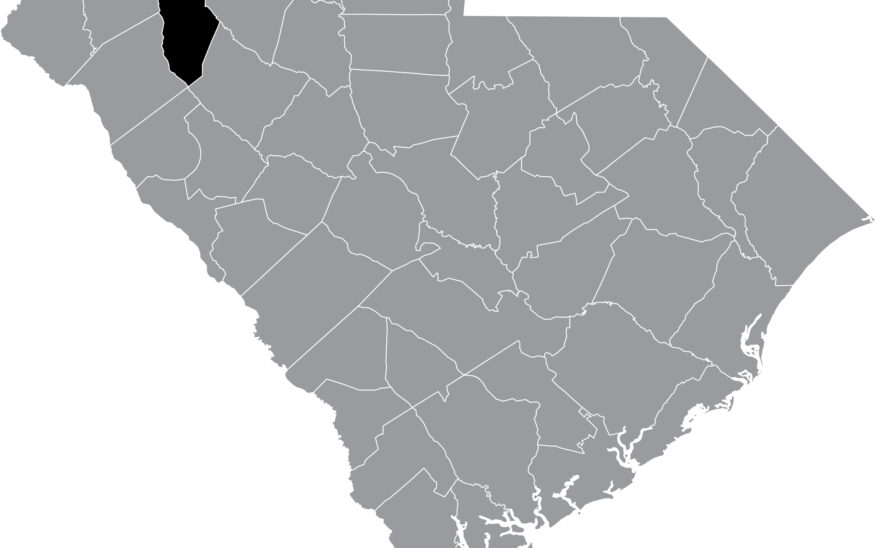
The circuit court erred when it affirmed the planning commission’s approval of a development plan for 73 homes in northern Greenville County, the South Carolina Court of Appeals has ruled.
On March 31, 2021, a developer filed a preliminary subdivision application with the Greenville County Planning Department, proposing to subdivide and develop approximately 43 acres of rural agricultural and equestrian land west of Reedy River, at the intersection of Meadow Brook and Old White Horse Roads.
Dubbed “The Stables,” the proposal was for a cluster development consisting of 73 homes and 14.05 acres of open space.
The request for preliminary plan approval was placed on the agenda for the planning commission’s May 26, 2021, meeting. Prior to the meeting, 19 parties submitted letters opposing the proposed development. A resident who owned a horse farm adjacent to the proposed location organized and incorporated the Alliance to Preserve the Old White Horse Corridor.
Planning commission staff prepared a two-page report recommending that the commission approve the preliminary plan.
At the meeting, counsel for the Alliance argued that approval for the plan should be denied because the development was incompatible with the surrounding land use density of the area and did not comply with the state’s open space requirements for cluster developments.
Another nearby landowner appeared in opposition, presenting a petition with 191 names opposing The Stables and speaking about additional concerns regarding traffic increases, storm water management and flooding, the safety of a proposed access to the development, density and the lack of compatibility with the surrounding rural and equestrian area.
Counsel for the developer presented and faced questions about the proposed access to The Stables, access for the fire department and the potential for flooding.
The planning commission voted 5-4 in favor of approving the plan. The Alliance appealed.
Writing for the panel in Old White Horse Road Corridor, LLC v. RP&L, LLC, Judge Stephanie P. McDonald reversed, joined by Chief Judge H. Bruce Williams and Judge Matthew P. Turner.
The court agreed with the Alliance that the planning commission erred in failing to propound any findings of fact, conclusions of law or other written grounds setting forth its reasoning for approving the preliminary subdivision application for The Stables.
“[W]e are not convinced that the meeting minutes, meeting transcript, and ‘file material’ in this case provide a sufficient record to allow meaningful review of the Commission’s 5-4 decision to approve [the developer’s] preliminary subdivision application,” the court wrote. “We are unable to discern the grounds for approval as required by section 6-29-1150(B) from the record before us. There is nothing in the record indicating the Planning Commission’s reasons for approval, and it is unclear what facts the Planning Commission deemed established. Moreover, we are unable to discern how the Planning Commission applied these ‘facts’ to the [Land Development Regulations (LDR)] and applicable zoning ordinances, nor can we decipher the divided Commission’s reasoning from its series of questions and answers.”
Further, the court found the planning commission erred in approving the application because it lacked evidence establishing the proposed development satisfied all three criteria of the LDR.
According to Greenville County’s LDR Article 3.1, submitted subdivisions may be approved if they met all three criteria: adequate existing infrastructure and transportation systems exist to support the project; the project is compatible with the surrounding land use density; and the project is compatible with the site’s environmental conditions, including wetlands, flooding, endangered species and/or habitat and historic sites and/or cemeteries.
Starting with the first of the criteria, the traffic concerns raised by the Alliance are “significant because we see nothing in this record to suggest that the existing transportation infrastructure will support The Stables as proposed,” the court wrote. “To the contrary, [counsel for the developer] indicated that the developer ‘will make improvements’ to the road but did not specify what such improvements might entail other than ‘whatever the county asks us to do.’”
As for the second criterion, the target density for the area is zero to one dwellings per acre – but the developer was aiming of a density of over 5.5 homes per acre, as clustered.
The third and final consideration also lacked evidence to support the recommendation, as the record included correspondence from an opposing neighbor that the area is already prone to flooding.
“We have been unable to find evidence in the record from which the Planning Commission could properly determine that this proposed development plan satisfies the LDR’s environmental compatibility, infrastructure, and transportation criteria,” the court concluded. “[W]e find the circuit court erred in upholding the Planning Commission’s approval of the proposed development plan and preliminary subdivision application for The Stables.”
William M. Wilson III of Wyche Law Firm in Greenville, who represented the Alliance, praised the decision, which he said provided an “important check on the government.”
“As a governmental entity, the Planning Commission is charged with exercising discretion, and they need to articulate the reasons for what they are doing,” he said. “If they fail to do that, then they have not exercised their discretion, and this opinion demonstrates that courts are willing overturn their decisions.”
Greenville attorney Townes B. Johnson III, who represented the developer, did not respond to a request for comment.
Neither did Andrew F. Lindemann of Columbia, who represented the planning commission.
Related Articles
Related Content





Business Law
- Economy forces attorneys to get down to business
- Business Court judges trawl for customers
- Va. company's Web site did not subject business to personal jurisdiction in S.C., appeals panel rules
- Former running back from S.C. wins courtroom victory in contract dispute
- Contract – Government Contract – Qui Tam – False Claims Act
- Licenses & Permits – Beer & Wine Permit – Restrictive Covenant – Suitable Location
- Consumer Protection – FCRA – Auto Loan – Bank Accounting Errors
- Licenses & Permits – Veterinarian – Vaccine Maintenance
- Tort – Business Tort – Va. Computer Crimes Act – Trade Secrets
- Textile firm, railroad settle Graniteville train wreck lawsuit
- State regulators look at car dealer accused of lying to customers
- Subprime mortgage meltdown hits securities law


Commentary
- When not to believe your (lyin’) eyes
- Conduct a technology audit to improve law firm efficiency
- When the client brings ChatGPT to the consultation
- Where is she now, this model who was so beautiful?
- Content Marketing: Where law firms lose referrals and how to prevent it
- Your best people are not leaving for more money — they are leaving because you stopped paying attention
- Best at Work Insights: The choice we’re making about AI
- Beyond burnout: The case for workplaces where people thrive
- The December question every leader should anticipate
- Best at Work Insights: Don’t Import 996: Why America Should Reject Overwork Culture
- Law ‘n History: The beer, scandal and haunted mansion of the Lemp dynasty
- Using QALY to quantify emotional distress in legal cases
Polls
 Loading ...


SC Lawyers Weekly keeps you connected with the latest legal news, Daily Practice and Breaking
News alerts.
Sign-up for SC Lawyers Weekly Email Alerts
