


 Free Newsletter

Trump dismisses lawsuit against IRS, court filing shows
Reuters//May 18, 2026//


Summary:
- Trump dismissed $10 billion lawsuit against IRS
- Judge Kathleen Williams questioned parties’ antagonism
- Former IRS contractor Charles Littlejohn pleaded guilty
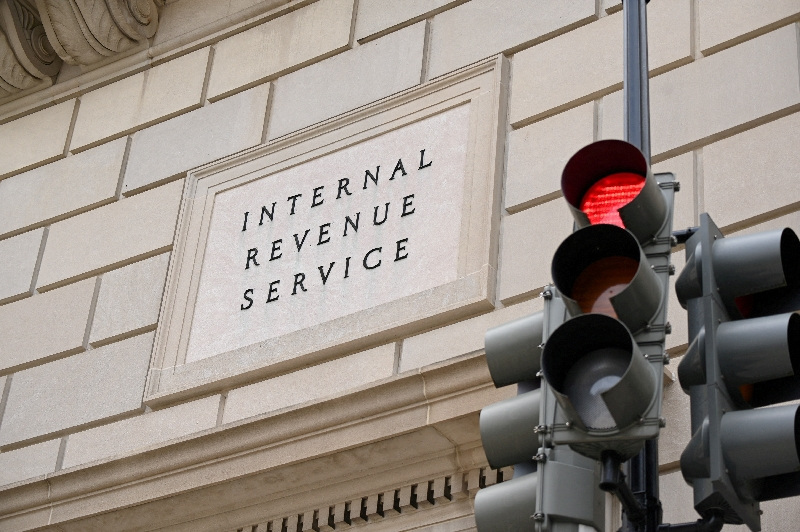
U.S. President Donald Trump voluntarily dismissed his $10 billion lawsuit against the Internal Revenue Service, according to a May 18 court filing.
Terms of the dismissal were not immediately available, including whether the parties have settled.
The White House did not immediately respond to requests for comment.
Trump, his adult sons Donald Trump Jr. and Eric Trump, and the Trump Organization, sued the IRS in January, arguing the agency should have done more to prevent a former contractor from disclosing their tax returns to media outlets during the president’s first term.
Trump has long said the U.S. government was weaponized against him by political opponents, and has used the legal system to seek retribution and compensation since returning to the White House last year.
The case arose from former IRS contractor Charles Littlejohn’s leak of Trump’s tax returns to media outlets, including the New York Times and ProPublica, in 2019 and 2020.
These returns showed that Trump paid little or no income taxes in many years, the Times reported in 2020.
Prosecutors charged Littlejohn in 2023 with leaking tax records of Trump and thousands of other wealthy Americans to the media, saying he was motivated by a political agenda. Littlejohn later pleaded guilty to improper disclosures, and a judge sentenced him to five years in prison.
Trump filed the lawsuit personally, not in his official capacity as president.
The litigation against the IRS has raised novel legal questions, including conflicts of interest, about whether a president can sue his own government.
Under the U.S. Constitution, federal courts may only hear genuine disputes between litigants with opposing stakes in the outcome.
U.S. District Court Judge Kathleen Williams in Miami, who oversees Trump’s lawsuit, wrote last month that it was unclear whether the parties to the lawsuit were “truly antagonistic to each other.”
Williams had set a court hearing for May 27 to hear arguments on whether she should dismiss the case on those grounds.
(Reporting by Susan Heavey, Katharine Jackson and Jan Wolfe in Washington, D.C.; Editing by Chizu Nomiyama)
Related Articles
Related Content





Legal Tech
- How ransomware tactics against law firms are changing
- How large language models are leveling the personal injury playing field
- Attorney Share, Lawmatics integrate to automate law firm referrals
Business Law
- Economy forces attorneys to get down to business
- Business Court judges trawl for customers
- Va. company's Web site did not subject business to personal jurisdiction in S.C., appeals panel rules
- Former running back from S.C. wins courtroom victory in contract dispute
- Contract – Government Contract – Qui Tam – False Claims Act
- Consumer Protection – FCRA – Auto Loan – Bank Accounting Errors
- Tort – Business Tort – Va. Computer Crimes Act – Trade Secrets



Commentary
- We tore out our own backup generator
- When is a PIP an adverse employment action?
- Legally Speaking: What spring can teach us about active listening
- A useful patent management government notice
- The third option: Why your best employees are quietly losing their edge
- ‘AI won’t take your job’ and other things CEOs say before the layoffs
- When not to believe (your lyin’ eyes)
Polls
 Loading ...


SC Lawyers Weekly keeps you connected with the latest legal news, Daily Practice and Breaking
News alerts.
Sign-up for SC Lawyers Weekly Email Alerts
